Disease trajectories & progression
Developing time-to-event and longitudinal methods for biobank and electronic health record data to characterize disease onset, progression, and transitions, enabling prediction across the entire disease course.
The Ohio State University · Biomedical Informatics
We develop and apply computational and statistical methods that leverage large-scale biobank data to study disease trajectories, improve disease risk and progression prediction, and advance equitable, globally generalizable models for precision health.
Led by Ying Wang, MD, PhD, Assistant Professor, Department of Biomedical Informatics, College of Medicine.
Our work lies at the intersection of statistical genetics, biobank-scale data science, and precision health. We develop and apply computational and statistical methods to characterize the genetic architecture of disease onset, progression, and trajectories by integrating genomic variation, socio-environmental factors, longitudinal electronic health records, and multi-omic data. A central focus of our research is the development of scalable and rigorous frameworks for multi-ancestry analysis, cross-biobank harmonization, rare and common variant association, and equitable risk prediction across diverse populations and healthcare systems. Our long-term goal is to translate these advances into robust, interpretable, and globally generalizable models for understanding disease progression and advancing precision health.
Developing time-to-event and longitudinal methods for biobank and electronic health record data to characterize disease onset, progression, and transitions, enabling prediction across the entire disease course.
Characterizing the genetic architecture of complex diseases across diverse populations through multi-ancestry, common and rare variant, and gene-environment analyses.
Developing scalable computational methods for harmonizing and integrating global biobanks and heterogeneous health data to enable reproducible genomic discovery.
Building equitable, globally generalizable prediction models by integrating genomics, clinical records, socio-environmental exposures, and other multi-modal data.
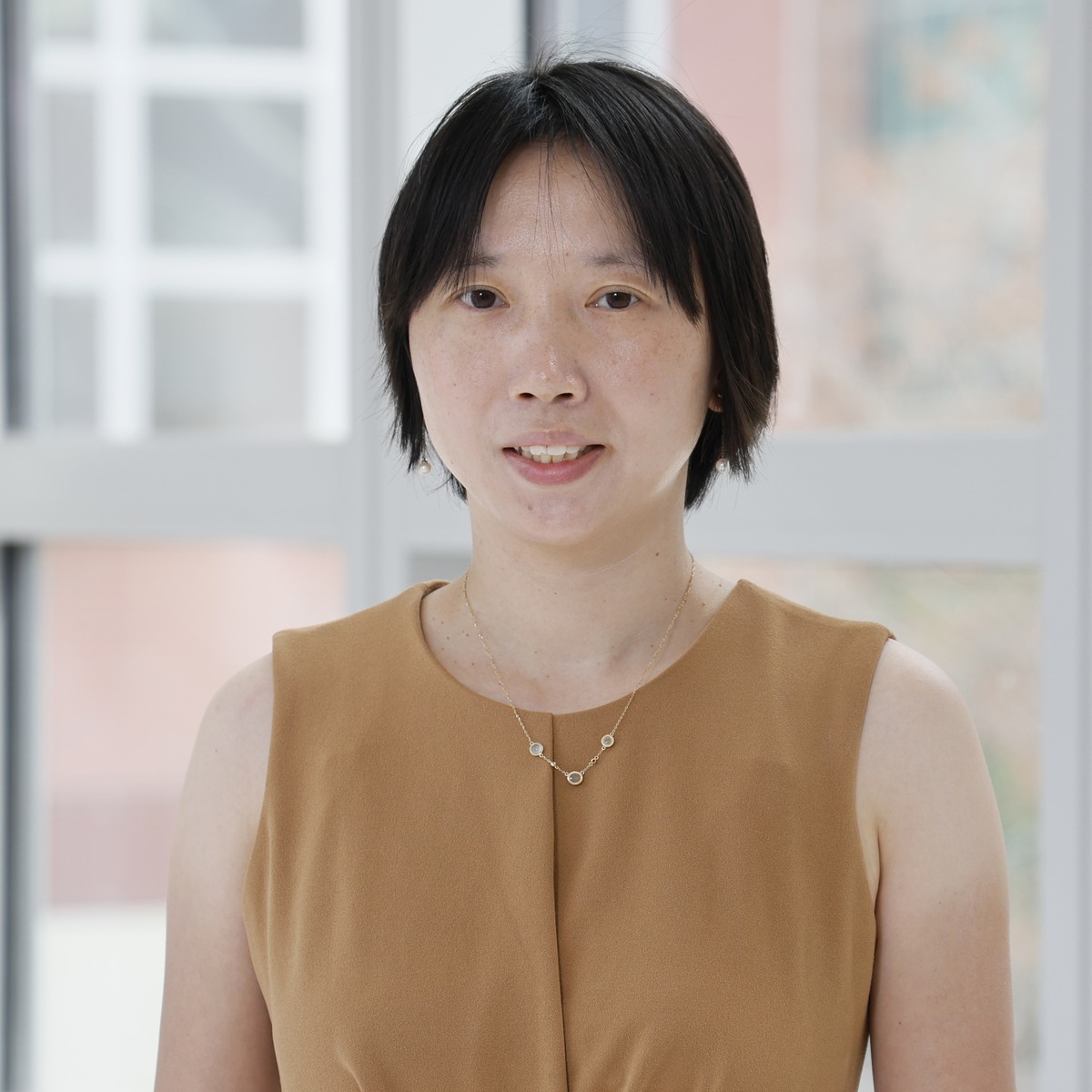
Principal Investigator · Assistant Professor
Department of Biomedical Informatics, College of Medicine
Member, The Ohio State University Comprehensive Cancer Center (OSUCCC – James)
Ying is a statistical geneticist who develops and applies integrative modeling frameworks to combine biobank-scale genomic data, socio-environmental determinants, and longitudinal health records to better understand complex disease trajectories. Her research advances multi-ancestry genetic inference and cross-biobank harmonization, with the goal of building equitable and globally generalizable models for population-scale precision health. She is a recipient of the NIH-NHGRI K99/R00 Pathway to Independence Award. Before joining Ohio State, she was an Instructor in the Analytical and Translational Genetics Unit at Massachusetts General Hospital and the Broad Institute of MIT and Harvard, where she also completed her postdoctoral training. She earned her PhD in statistical genetics from the University of Queensland.
We are recruiting. PhD students, postdocs, and rotation students who are excited about statistical genetics, biobank-scale data, AI and machine learning for genetics, and precision health are encouraged to get in touch. See Join Us.
Selected publications below. For the complete and up-to-date list, see Google Scholar. (Y. Wang = lab PI)
We are building the lab and are actively recruiting people who are excited about statistical genetics, biobank-scale data, and precision health.
Students in relevant OSU graduate programs (biomedical informatics, biostatistics, and related quantitative fields) are encouraged to reach out and mention the lab in their applications.
If you have (or are completing) a PhD in statistical genetics, computational biology, biostatistics, computer science, machine learning/AI, or a related field, we would love to hear from you.
Email to chat about projects and rotations in the lab.
Please send a short note about your background and interests, along with your CV, to the email address listed under Contact.
ying.wang [at] osumc.edu